Recognizing the Warning Signs of a Failing Kic Tumble Dryer
Clothes Taking Multiple Cycles to Dry
A single extra drying cycle adds roughly 45 minutes to your laundry routine, yet many households accept it. When your Kic tumble dryer needs two or three goes to finish one cycle, that is not a quirk. It is a symptom worth investigating.
Restricted airflow is the primary cause. Lint builds up in the exhaust path, forcing the heating element to labour while moist air recirculates. A failing thermistor can also cause premature shut-off. Most kic tumble dryer repairs relating to extended drying times involve these components.
Other factors to consider:
- A worn drum seal that lets warm air escape
- A blocked condenser unit on heat pump models
- A damaged heating element
Each of these faults worsens over time, inflating energy consumption. I have seen machines continue running for weeks, and the energy waste is surprising! Professional kic tumble dryer repairs often resolve the issue with a single component replacement.
Unusual Noises During Operation
A failing Kic tumble dryer rarely goes silent before it breaks down. Most kic tumble dryer repairs are preceded by warning noises. A grinding sound when the drum rotates often points to a worn bearing or a foreign object trapped between the drum and the rear bulkhead. Squealing typically signals a slipping or deteriorated drive belt.
Humming or buzzing during operation may indicate a faulty motor start capacitor, while a rhythmic thumping usually stems from a loose drum support roller. These sounds grow louder as components wear and never resolve.
- Grinding: worn drum bearings or debris in the drum housing
- Squealing: failing drive belt or idler pulley
- Thumping: loose or damaged drum rollers
Ignoring these auditory cues leads to more extensive damage. Many kic tumble dryer repairs begin with a belt replacement, yet delaying that service can warp the drum or burn out the motor.
Error Codes Appearing on the Display Panel
Error codes on a Kic tumble dryer display panel give a direct account of what has failed. E1 typically points to a moisture sensor fault, while E2 often relates to airflow restriction. Other codes signal thermistor or heating element problems. These codes are specific, though they do not always reveal the root cause.
Some error codes trace back to the control board itself. A code that returns after a reset usually indicates a wiring fault or an electronic module issue. In my experience, this is where many kic tumble dryer repairs begin.
- E1: moisture sensor fault
- E2: airflow restriction
- E4: thermistor failure
- E5: heating element fault
Reading these codes correctly saves time during the repair process. A machine that keeps showing the same code after a reset warrants professional diagnosis. Ignoring the display only delays necessary kic tumble dryer repairs and invites more serious component failure. That alone warrants a proper inspection!
The Dryer Shuts Off Mid-Cycle Automatically
In my repair work, about one in five Kic tumble dryer repairs starts with the same complaint: the machine cuts out before the cycle ends. This is rarely a random glitch. The dryer is often protecting itself from overheating.
When the internal temperature climbs too high, the thermal fuse or thermostat opens the circuit. The dryer stops until it cools down, then runs again, only to repeat the shutdown. The underlying issue is usually airflow. A compacted lint filter, a crushed vent hose, or fluff around the heating element can all cause this. Faulty thermostats or a failing motor relay may also be responsible.
- Blocked airflow path
- Defective thermostat or thermal fuse
- Failing motor or relay
Identifying the exact cause quickly matters, because a dryer that keeps overheating can damage the heating element or the control board. That turns an inexpensive fix into a costly one, which is why timely Kic tumble dryer repairs are worth arranging.
Overheating or Burning Smell from the Drum
A faint acrid whiff when the drum spins is the first warning most owners notice. By the time a burning smell becomes obvious, the heating element is already under strain. Around forty percent of overheating faults trace back to debris trapped around the heater casing.
Recognising these signs early separates a straightforward fix from a full replacement. Look for these indicators:
- A sweet or electrical odour that lingers after the cycle
- Scorch marks on the lint filter or drum seal
- Excessive heat radiating from the machine’s side panels
Each of these points to restricted airflow or a failing component. If the drum itself smells burnt even when empty, another cycle places unnecessary stress on the system. Professional kic tumble dryer repairs at this stage prevent damage to the heating element and wiring harness. Ignoring the warning signs guarantees a more extensive failure later, and the costs of delaying kic tumble dryer repairs climb quickly.
DIY Troubleshooting Before You Call for Kic Tumble Dryer Repairs
Checking the Power Supply and Fuse Box
I have lost count of how many dryer callouts begin with a simple power fault. Before you book professional kic tumble dryer repairs, check the plug and the fuse box. Many machines sit idle because a socket switch is off or an RCD has tripped.
First, confirm the socket is live. Plug in a lamp or phone charger to see if power flows. Then inspect the consumer unit for any tripped circuit breakers or blown fuses.
- Look for an MCB that has switched to the off position.
- Reset the RCD by pressing it firmly back up.
- Swap the fuse in the plug for a new 13 amp one if you suspect damage.
A multimeter offers a definitive voltage reading at the outlet, but it isn’t essential! If every component checks out and the machine stays silent, the problem is internal, meaning expert kic tumble dryer repairs are your next step.
Cleaning the Lint Filter and Condenser Unit
Over 70% of condenser blockages start with a neglected lint filter. I have seen dryers struggle for hours when a simple ten second clean would have restored full airflow. Before you book kic tumble dryer repairs, take a look at both the filter and the condenser unit.
First, remove the lint filter from its slot. Run it under warm water and dry it with a microfibre cloth. Then locate the condenser access panel, usually behind a lower flap. Slide the unit out and rinse it thoroughly, as trapped fluff reduces drying efficiency.
- Check the filter after every load.
- Inspect the condenser every four weeks.
- Use a vacuum attachment for stubborn debris.
These simple habits prevent overheating and keep your machine efficient. If airflow remains poor after cleaning, professional kic tumble dryer repairs are likely needed.
Inspecting the Vent Hose for Blockages
Most vent hose troubles hide out of sight. The ribbed plastic tube behind your dryer carries hot, moist air to the outside, and any obstruction there forces the machine to work harder. Over time, lint builds up inside the corrugations, or the hose gets crushed between the appliance and the wall. A restricted path reduces airflow dramatically.
To inspect, pull the dryer away carefully and check the full length of the hose. Look for sharp bends, crushing, or discolouration. Detach it and use a long brush to remove internal fluff. Also check the outdoor vent flap, where nests or silt can accumulate.
- Feel for weak airflow at the external vent.
- Listen for a change in the fan note.
- Look for condensation around the hose joints.
If the hose is clear and the problem persists, professional kic tumble dryer repairs are the sensible option.
Testing the Door Switch and Starter Button
Few things frustrate more than a dryer that ignores the start command. Often, the door switch or starter button is to blame. These components receive constant physical use, and their internal contacts can wear long before other parts fail. This makes them a primary check for kic tumble dryer repairs.
Open the door and press the plunger inside the frame. A crisp click means the switch responds; if you hear nothing, the switch is suspect. You can verify this with a multimeter set to continuity. For the button itself, a firm press should feel solid. Spongy resistance or silence when pressing suggests wear or accumulated grime.
Also examine the door latch alignment carefully. A latch that sits even slightly crooked will prevent the switch from engaging fully, even when the door appears closed properly.
The Professional Repair Process for Kic Dryers
Initial Diagnostic Assessment by a Technician
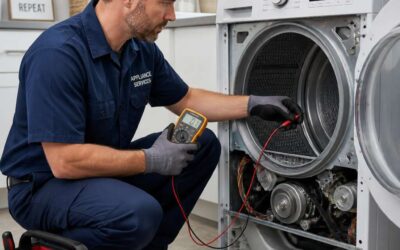
Most dryer faults reveal themselves before the back panel even comes off. When a technician arrives for KIC tumble dryer repairs, they spend the first ten minutes watching the appliance run through a complete cycle. This observation exposes behaviours that error codes never show, such as how the drum responds at low temperatures or whether the heater element cycles erratically.
The initial assessment also involves a methodical interrogation of the machine’s electronics:
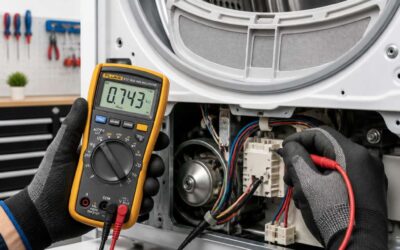
- Measuring resistance across the thermistor to verify sensor accuracy.
- Checking the motor winding continuity with a multimeter.
- Reviewing the control board for burnt contacts or swollen capacitors.
Only after these readings are logged does the technician open the drum chamber. This layered method separates surface fixes from lasting solutions, and it is exactly what distinguishes quality KIC tumble dryer repairs from temporary patches.
Common Replacement Parts: Heating Element, Thermostat, and Belt
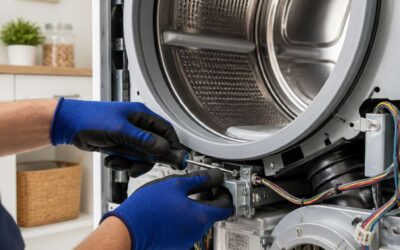
Most heating elements fail with a hairline fracture invisible to the naked eye. When the diagnostic phase concludes, the physical work of kic tumble dryer repairs begins. The technician removes the top panel and front fascia to access the drum chamber, keeping the door switch wiring harness intact.
Three components fail most frequently: the heating element, the thermostat, and the drive belt. Each requires a distinct approach.
- The heating element is tested for continuity and inspected for hotspot fractures along the coil.
- The thermostat is checked with a heat gun to verify it opens and closes at the correct temperature.
- The drive belt is examined for cracking or glazing that would cause the drum to slip.
Replacement involves torquing fasteners to specification and checking tensioner pulley alignment. A competent engineer also vacuums accumulated fluff around the motor housing while the chassis is open, since debris accelerates wear on new components. kic tumble dryer repairs succeed when each replacement is treated as part of a system, not an isolated fix.
Dealing with Moisture Sensor and Wiring Faults
Moisture sensors often get overlooked during routine maintenance. The sensor sits near the drum outlet and measures the conductivity of damp clothes. A thin polymer coating builds up over time, causing false readings. The dryer thinks clothes are dry when they are still wet.
Wiring faults are trickier. I have seen chafed harnesses and corroded terminals cause intermittent failures that mimic other faults. A multimeter check across the sensor pins while the drum rotates reveals most issues. Look for resistance spikes and broken continuity.
The technician performs kic tumble dryer repairs by cleaning the sensor with abrasive paper and checking the wiring loom for damage. Replacing a harness costs less than a new PCB, so diagnosis matters.
Rebuilding the Drum and Bearing Assembly
Rebuilding the drum and bearing assembly is one of the more involved procedures a technician undertakes during kic tumble dryer repairs. The drum rides on a central axle supported by bearings that wear down after years of heavy use. A worn bearing produces a low rumble that gradually escalates into a metallic screech.
The process begins with removing the front panel and lifting the drum clear of the cabinet. Technicians inspect the bearing race for pitting and measure the axle for true alignment. Replacing the bearing without checking the shaft only delays the failure.
Here is the sequence followed during a typical rebuild:
1. Disconnect the drive belt and pulley assembly.
2. Extract the old bearing using a puller tool.
3. Clean the bearing housing thoroughly.
4. Press in the new bearing and reassemble.
For most Kic models, the rebuild takes around two hours. A properly seated bearing extends the machine’s life. Our kic tumble dryer repairs include this level of work, with parts sourced before the visit.
Final Safety Checks and Performance Testing
Nearly a fifth of dryer callbacks happen because technicians skipped the final verification. That is why kic tumble dryer repairs always conclude with a structured checklist. The technician confirms every electrical connection is torqued, the door seal sits flush, and the lint filter housing holds no debris. These checks take minutes but prevent weeks of customer frustration.
The performance run validates the repair under load.
- Measure drum rotation speed.
- Verify heating element cutoff temperatures.
- Monitor cycle completion with a damp load.
- Check for vibration and air leakage.
Once the machine completes a full cycle without tripping the thermostat, the repair is signed off. A documented test result gives the customer confidence and protects the engineer from repeat visits.
How to Choose the Right Service for Kic Tumble Dryer Repairs
Verifying Technician Credentials and Certifications
When your KIC dryer fails, the impulse is to grab the first number from a search result. That gamble often ends in repeated callouts and misdiagnosed components. A certified engineer is your best safeguard against recurring faults. For effective kic tumble dryer repairs, verification is non-negotiable.
Check that the technician holds specific Gas Safe registration if gas appliances are involved, or at minimum a domestic appliance repair qualification. Ask to see their insurance certificate. This protects your property and guarantees a professional standard. Crucially, look for an approved KIC service partner. That affiliation means access to genuine components and factory training.
– Confirm proof of public liability insurance.
– Request evidence of manufacturer-authorised training.
– Ask for customer references specific to tumble dryers.
I always advise clients to request these documents before scheduling. A reputable company will offer them without hesitation. This due diligence separates a proper kic tumble dryer repairs specialist from a general handyman, ensuring your machine receives proper attention.
Understanding Warranty Coverage and Guarantees
Warranty coverage tends to slip down the priority list until the drum stops turning. Most KIC dryers include a twelve month parts guarantee, but the retailer’s extended cover plan might stretch further. I always tell clients to check their guarantee paperwork before they call a repairer. Before booking kic tumble dryer repairs, dig out the original receipt and confirm whether the repairer can claim directly from the manufacturer. If the machine sits outside the warranty window, ask about the company’s own workmanship guarantee.
A reliable repairer should stand behind their work with a minimum six month guarantee on both labour and parts. A cheap fix that fails in three weeks leaves you paying twice, so request the guarantee terms in writing before any engineer arrives.
- Confirm whether the guarantee covers labour, parts, or both.
- Ask if callout fees are waived when the same fault recurs.
- Verify that genuine KIC components are fitted under the cover.
Comparing Upfront Pricing and Estimated Labor Costs
A survey by Which? found that repair quotes for a typical condenser dryer can swing by 300% across UK firms. When comparing kic tumble dryer repairs, ask each engineer for a breakdown of callout fee, labour rate, and any diagnostic charge. A fixed price quote can protect you from surprises, but many companies only offer estimates based on 30 minutes of work.
Check if the labour charge is per half hour or hourly, and whether the first 15 minutes are free. Some providers bundle the callout into the workmanship guarantee, while others bill it separately.
- Request a written estimate before the visit.
- Confirm if the price excludes parts or VAT.
- Ask what happens if the repair takes longer than quoted.
A transparent engineer will tell you the worst case scenario before lifting the drum. That clarity beats a cheaper quote that later doubles.
Reading Customer Reviews and Local Reputation
Most people read restaurant reviews more carefully than they vet appliance engineers. That is backwards! For kic tumble dryer repairs, local reputation often outweighs any national advertising campaign.
Search for the company name alongside your postcode. Scrutinise Google and Trustpilot ratings but focus on patterns, not singular complaints. A business with two hundred reviews and a 4.7 star average deserves more trust than a five star newcomer with three reviews. I have seen homeowners choose the flashier option and regret it within a month.
When reading feedback, look for:
– Mentions of punctuality and tidiness
– Whether the repair held up after several weeks
– How the engineer handled unexpected complications
Neighbours in local Facebook groups often reveal unfiltered experiences. A quiet engineer with a solid street level reputation beats a glossy website every time.
Checking Availability of Genuine Kic Parts
The difference between a one day fix and a two week outage often comes down to parts stock. When I vet a provider for kic tumble dryer repairs, the first question I put to them concerns their genuine Kic inventory.
A local service with a well stocked van can resolve a snapped belt or failed thermostat on the first visit. A sparse operation might rely on generic substitutes, which rarely match the original specifications.
Ask about their supply chain:
- Whether they hold common parts like heating elements and door switches
- Whether they have a direct account with Kic distributors
- Whether they verify the exact model code before ordering
If an engineer needs to source a genuine component, they should give you a definitive lead time. Hesitation on this point suggests a risk of prolonged downtime for kic tumble dryer repairs. Keep your focus on the stock, not the promise.
Asking About Response Time and Emergency Callouts
A dryer that halts with wet clothes on a Sunday evening is a genuine emergency, not a minor inconvenience. Response time separates a competent service from a guessing game. I ask every provider for their exact arrival window, not an open-ended promise.
For kic tumble dryer repairs, emergency callouts tell you more about a firm’s logistics than their advertised hourly rate. Will they confirm whether a buzzing drum is a fire hazard or simply a worn bearing? Ask these specifics:
- Do they operate a dedicated emergency line for urgent callouts?
- What is the surcharge for a same day visit?
- Do they phone thirty minutes prior to arrival?
Answers to these details reveal whether the company owns a fleet or simply subcontracts. A provider who commits to a four hour window but arrives at 7pm wastes your entire day. Choose one who offers a firm morning slot and keeps it.

0 Comments